Major AI Companies Pledge Self-Regulation in Washington Summit
Big Tech Makes Promises on AI Safety
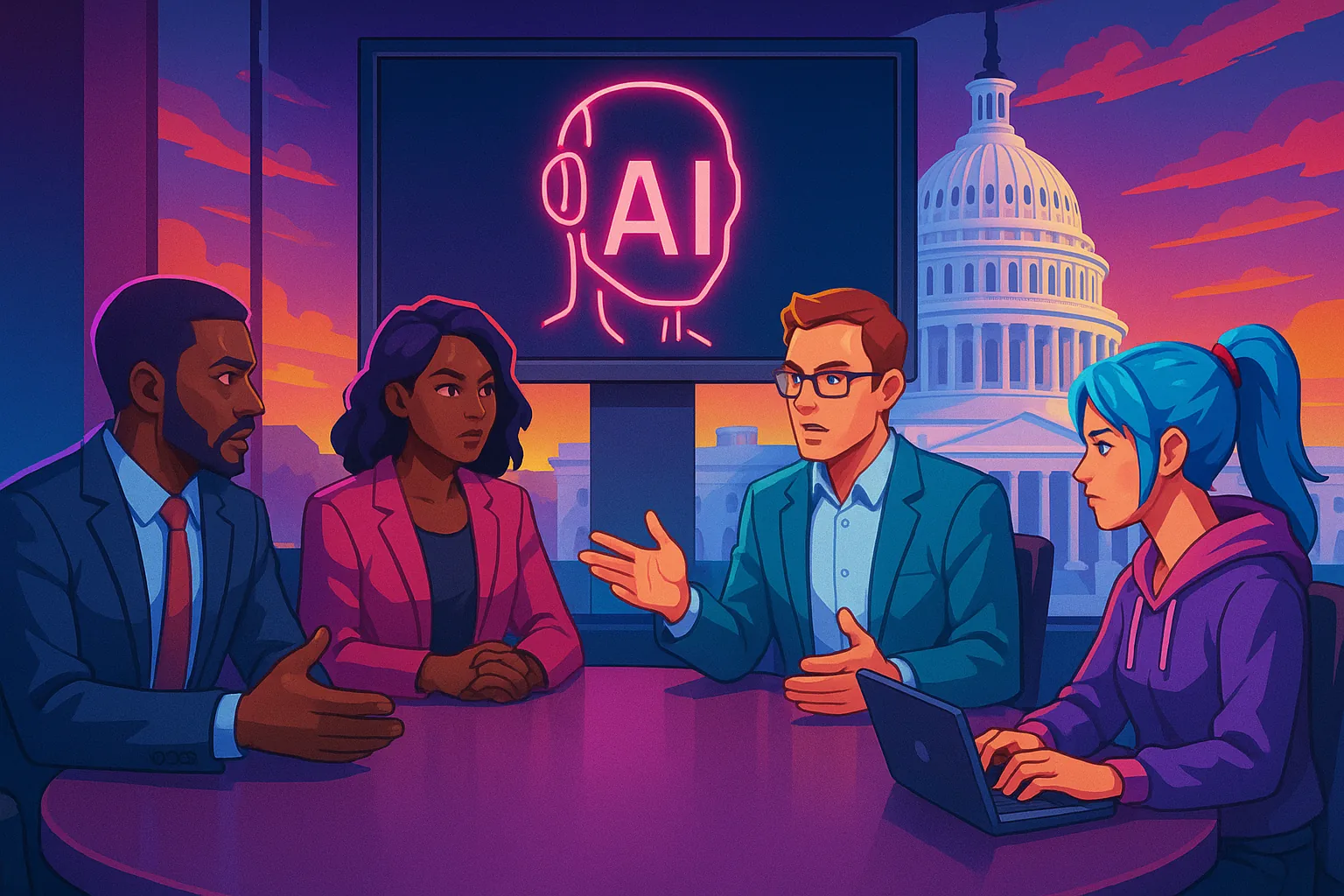
The leaders of the world’s most influential AI companies gathered in Washington recently to sign what’s being called the ‘Joint Commitment on Frontier Responsibilities.’ This agreement brings together executives from Google, Anthropic, Meta, OpenAI, SpaceXAI, and Nvidia, all promising to handle AI development with care and responsibility.
The core idea here is self-regulation. Instead of waiting for Congress to pass potentially clunky legislation that might not keep up with how fast AI is moving, these companies are saying they’ll police themselves. They’re committing to develop their AI models safely, though the specific details of what that means in practice remain somewhat vague.
What This Means for the Industry
For those of us who game on PC and follow tech news, this is actually pretty significant. These aren’t just random tech companies. Nvidia powers most of the GPUs we use for gaming and AI processing. OpenAI has been pushing the boundaries of what AI can do. Google and Meta have massive resources poured into AI research. When they all agree on something, it tends to shape the entire industry.
The Trump administration has voiced support for this approach, stating it strikes the right balance between allowing AI innovation to continue at full speed while still addressing legitimate safety concerns. The idea is that these companies understand the technology better than regulators do, so they’re best positioned to identify and mitigate risks.
Why Gamers Should Care
You might be wondering why this matters for gaming specifically. AI is increasingly becoming a huge part of game development and the gaming experience. We’re seeing AI-powered NPCs with more realistic behavior, procedural generation getting smarter, and tools that help developers create content faster. Nvidia’s DLSS technology, which uses AI to boost frame rates, is already a staple feature for PC gamers.
How these companies develop AI in the coming years will directly impact the tools available to game developers and the features we see in our hardware. If they prioritize safety and transparency, we’re more likely to see AI features that actually enhance gaming rather than creating problems.
The Self-Regulation Question
Of course, there’s always skepticism when massive corporations promise to regulate themselves. History has shown us that doesn’t always work out perfectly. The commitment these executives signed is a public pledge, but without external oversight, it’s hard to know how much teeth it really has.
Still, there’s an argument that heavy-handed government regulation could slow down innovation to a crawl, especially in a field moving as quickly as AI. Finding the right balance is tricky, and this self-policing approach is essentially an experiment to see if the industry can be trusted to develop responsibly on its own.
Looking Ahead
The real test will be whether these companies actually follow through. Words on paper are easy. Implementing genuine safety measures while competitors are racing to release the next big AI breakthrough is harder. We’ll need to watch how this plays out over the next few years.
For now, it’s a interesting development in the ongoing conversation about AI’s role in our future, including the future of gaming and PC hardware. Whether self-regulation proves effective or we eventually see more formal oversight remains to be seen.